Achieving Crisp Perfection: The 65-Day Secret of Peking Duck
"A single bite of golden, crackling skin can transport you straight to the imperial banquets of old Beijing."
Peking Duck is far more than a meal; it is a masterpiece of culinary engineering that balances texture, fat, and heat. To understand its greatness, one must look past the plate and into the centuries of tradition that refined its preparation.
Key Takeaways * The dish represents a pinnacle of Beijing’s culinary identity, evolving from imperial luxury to a global icon. * Perfection relies on a precise 65-day breeding cycle and a meticulous 24-hour glazing and resting process.
* Authentic enjoyment requires a specific ritual of thin pancakes, aromatics, and careful skin-to-meat ratios.
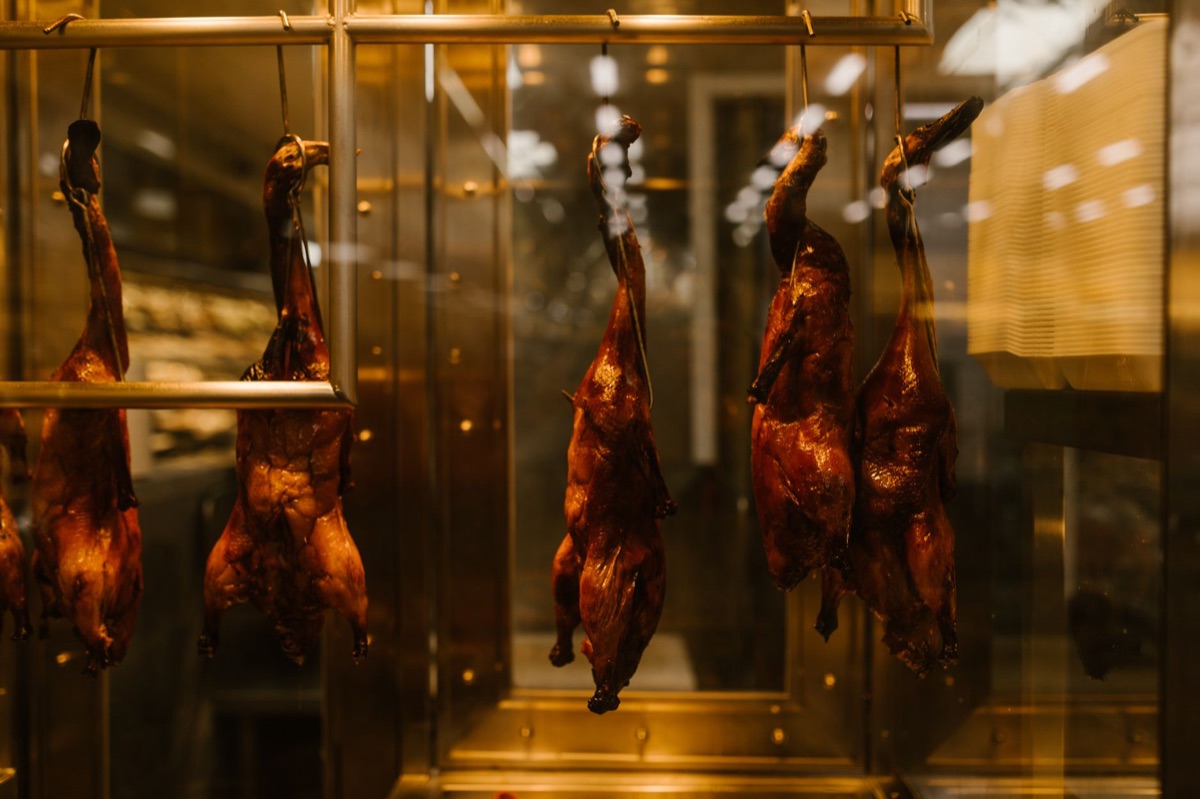
Why is Peking duck so legendary? The heavy wooden doors of a traditional Beijing courtyard restaurant creak open, revealing a room filled with the scent of woodsmoke and toasted sugar. In the center of the table, a lacquered platter holds a bird that looks more like a piece of sculpture than dinner.
Peking Duck is deeply woven into the identity of Beijing, serving as a symbol of prestige and refined taste. While many regional Chinese dishes focus on bold spices or heavy sauces, this dish celebrates the pure, transformative power of heat on poultry.
It rose from the specialized kitchens of the imperial palace to become a national treasure, representing the height of Beijing cuisine.
In the days of the emperors, such a meal was a ceremonial event, meant to showcase the wealth and sophistication of the court through its sheer technical difficulty.
As we look at the history of the Qing Dynasty through to the modern menus of 2026, the prestige remains. But how does a simple bird become so legendary through sheer technique?
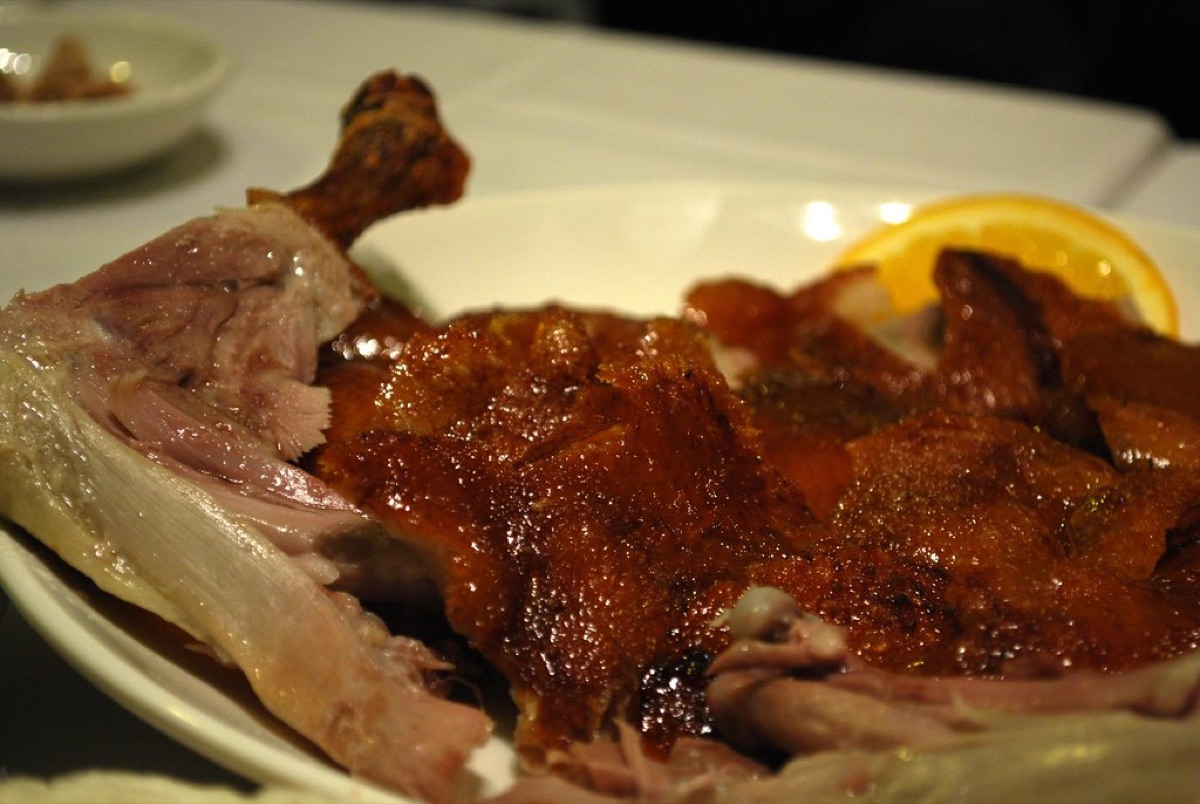
How do I get the perfect crispness? A chef stands over a massive, glowing hearth, carefully checking the color of a duck hanging from a hook. The skin must be translucent and taut, like fine parchment, before it ever touches a guest's plate.
Achieving that legendary crunch begins long before the duck reaches the oven. The birds used for this dish are specially bred and are typically slaughtered after 65 days of growth to ensure the ideal fat-to-meat ratio.
Once prepared, a second layer of glaze—composed of soy sauce, five-spice powder, and additional maltose—is applied both inside and out. The duck is then left to stand for 24 hours in a cool, dry place or a refrigerator to allow the flavors to penetrate and the skin to set.
The roasting methods vary, but they all demand absolute precision. In the traditional stove method, the duck is first submerged in boiling water before being placed on a griddle roughly 70 cm (28 in) above the cooking fire.
In this method, the water is replaced every 3 to 4 minutes until the duck is piping hot.
Alternatively, when using an oven, the temperature is carefully managed in stages. The duck might be heated at 150 °C (302 °F) for 20 minutes, followed by a second burst at 160 °C (320 °F) for another 10 minutes.
In other high-heat setups, ducks are hung on hooks above the fire and roasted at a temperature of 270 °C (518 °F) for 30 to 40 minutes. This intense heat is what renders the fat, creating that signature separation between the skin and the meat.
But once the heat is mastered, how does one actually eat it?
The Ritual of Enjoyment: Mastering the Dining Experience
The server approaches the table with a long, sharp cleaver, the blade catching the ambient light. With practiced, rhythmic strokes, the duck is carved into thin, uniform slices, the skin separating cleanly from the meat.
The true magic of Peking Duck lies in the assembly. The meat is typically served in a specific sequence, often starting with the skin itself. In many high-end establishments, the skin is dipped in white sugar, which melts on the tongue to provide a burst of sweetness against the savory fat.
To eat it traditionally, you take a thin, delicate flour pancake and lay it flat. You add a slice of succulent meat, a generous smear of sweet bean sauce, and thin strips of fresh cucumber and scallion.
The combination of the warm, oily duck, the cool, crisp vegetables, and the soft, chewy pancake creates a perfect balance of textures.
When I sat down at a renowned restaurant in Beijing in late 2025, I watched the chef slice the skin so thin it was nearly translucent. It was a lesson in precision that no textbook could capture. It is a ritual of layering flavors that requires both patience and an appreciation for the chef's craft.
However, there is a specific way to execute this at the table to ensure you don't miss the nuances.
The Perfect Bite Checklist
- Lay one thin flour pancake flat in your palm.
- Spread exactly one teaspoon of sweet bean sauce in the center.
- Place one slice of skin-on meat atop the sauce.
- Add two thin strips of cucumber and one slice of scallion.
- Fold the pancake into a tight, manageable roll and eat in one or two bites.
While the technique is vital, there are times when the ritual might not suit your needs.
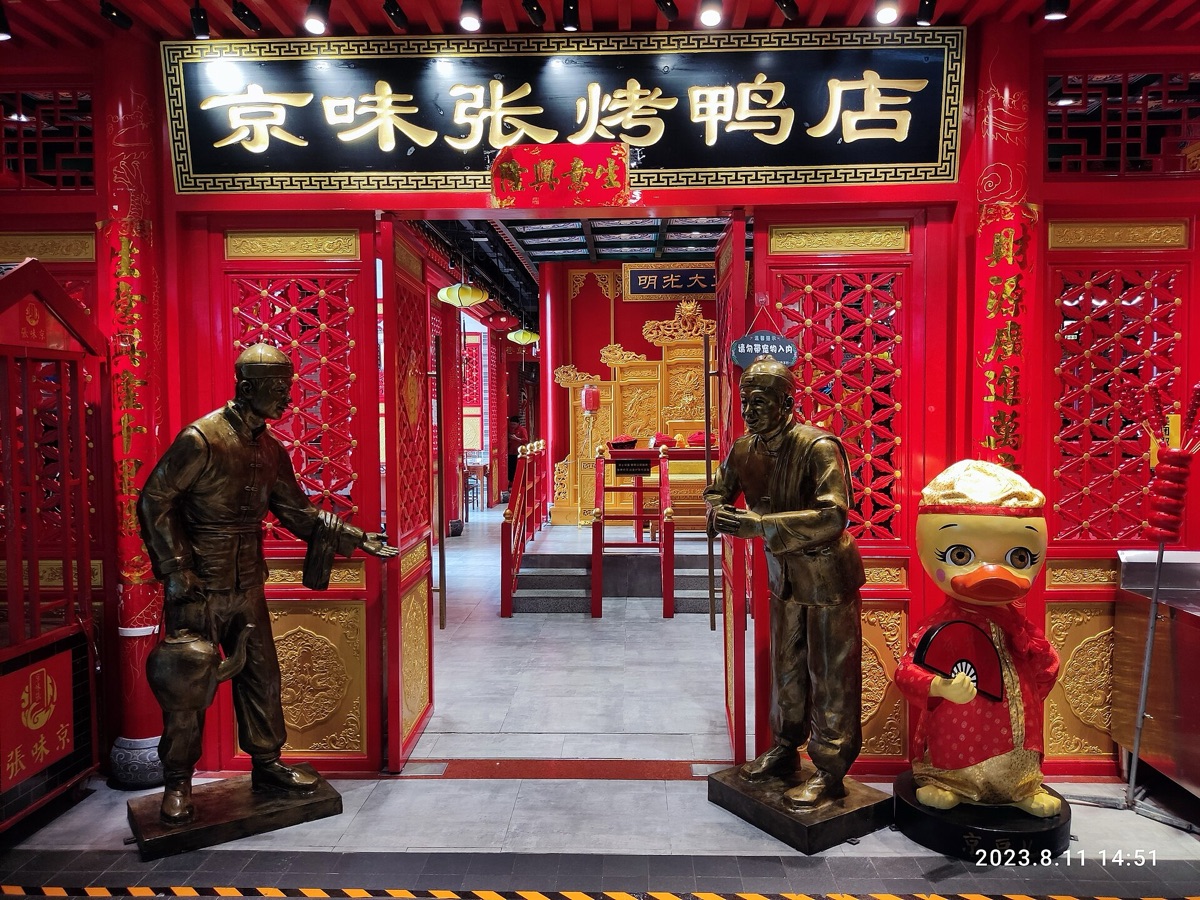
When is This Not the Right Choice?
While the duck is a masterpiece, it is also an incredibly rich and heavy meal. Because of the high fat content and the density of the sweet bean sauce, a single portion can be quite filling.
This dish is not ideal for those seeking a light, quick lunch or a meal centered on high-protein, low-fat dietary requirements. It is a celebratory feast meant for lingering over, not a quick fuel stop.
| Feature | Traditional Stove Method | Oven Method |
|---|---|---|
| Primary Heat Source | Open fire/griddle | Controlled oven |
| Temperature Range | High heat/Boiling water | 150°C to 160°C (or up to 270°C) |
| Key Technique | Submerging in boiling water | Multi-stage temperature shifts |
| Focus | Smoke and direct heat | Evenness and controlled rendering |
Beyond the Main Course: Contextualizing Chinese Gastronomy
A traveler sits at a crowded street stall in Chengdu, surrounded by the numbing heat of Sichuan peppercorns, a stark contrast to the refined elegance of the Beijing meal they had the night before.
Peking Duck stands as a pillar of Northern Chinese cuisine, offering a different sensory profile than the spicy, bold flavors of Sichuan or the fresh, seafood-heavy dishes of Guangdong.
While Sichuan cuisine might challenge the palate with heat, Peking Duck sedes the palate through texture and aroma.
It represents the "ceremonial" side of Chinese dining, where the presentation is as vital as the taste. In the vast landscape of Chinese gastronomy, this dish serves as a benchmark for how technique can elevate a single ingredient into an extraordinary experience.

Comments 0